Is your Covid-19 Face Mask Causing Jaw pain? Tips to Reduce the discomfort of covering up!
“As I wear a face mask up to 8 hours a day, I noticed I clench a lot more and was getting severe mouth and jaw pain”. A common complaint we hear from many patients during these pandemic times!
The mask has become part of our “new normal” as it is the most worn item to help combat against the spread of COVID-19. As a result, many are experiencing pain in their jaw, headaches and ear aches from wearing the face mask throughout the day. The combination of wearing masks, bad posture from working from home and increased stress due to the pandemic can lead to temporomandibular joint TMJ dysfunction.
Your temporomandibular joint (TMJ) acts like a hinge, connecting your jawbone to your skull. This joint is involved in our everyday lives, for example, eating, talking, and breathing. When there is an injury or repeated stress applied to this joint, however, pain can occur. This is a temporomandibular joint TMJ dysfunction.
Some tips and tricks to alleviate jaw pain from wearing Face Mask:
Wearing a face mask can add more pressure on your jaw joint. You may notice that you are constantly pushing your jaw forward or breathing through our mouths – both of which can strain our jaw.
1.Relax/Unclench your jaw to reduce strain on jaw muscles
To relax your jaw, place your tongue on the roof of your mouth, behind your front teeth.
2.Breathe through your nose
Breathing through our mouths puts a strain on our jaw and muscles surrounding the jaw as our mouths are held slightly open. Breathing through our nose can help reduce the strain on our jaws!
3.Ear loops
Ear loops can help reduce the compression on our ears which can help alleviate the ear aches and headaches we may experience from wearing face masks.
If you are still experiencing pain, you may benefit from physiotherapy.
How Can Physiotherapy Help?
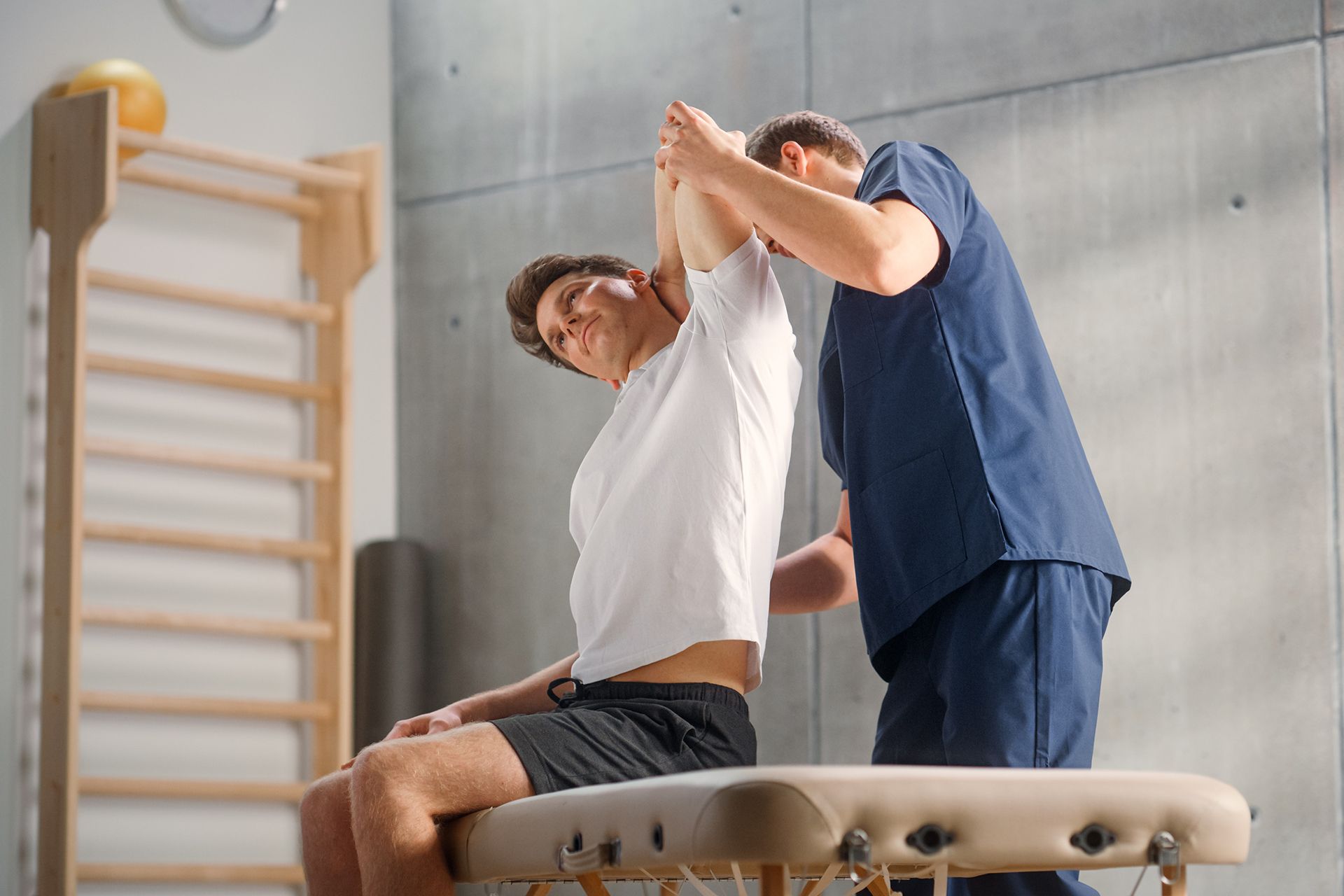
At Delta Physiotherapy & Rehab our physiotherapists are trained in assessing and treating TMJ dysfunction. A comprehensive assessment of TMJ and c-spine determine if the pain you are experiencing is related to postural/cervical muscular imbalance, joint laxity/subluxation, hypomobility, myofascial pain disorder, disk displacement disorder and many other.
After evaluation, a personalized treatment plan is tailored to reach patient’s specific goals.
In other words, the focus of physiotherapy for TMJ dysfunction is relaxation, stretching, and releasing tight muscles. A treatment plan will also include instruction on exercises and stretches for regaining normal jaw function.
A variety of therapeutic techniques may include:
- Manual therapy techniques to improve jaw movement
- Electrical stimulation to decrease pain
- Laser therapy to reduce pain, decrease inflammation, increase muscle/tissue healing
- Heat and Ice therapy for improved circulation and reduction of swelling
- Shockwave therapy
- Postural correction and strengthening
- Passive, active-assisted, active exercises
Do I need a Referral to see a Physiotherapist?
Physiotherapy is considered an essential service, and you don’t need a referral from a doctor to see a physiotherapist. To clarify, you should seek medical attention if you have persistent pain or tenderness in your jaw and/or ear to rule out any sign of infection.
If you have difficulty opening and closing your mouth, jaw pain or other TMJ discomfort
contact us at Delta Physiotherapy & Rehab, and we can assist in discussing possible causes and treatment plans to address your problem.